
Trade shows remain one of the most effective marketing channels for industrial manufacturers looking to generate qualified leads, strengthen customer relationships, and build brand awareness. However, success doesn’t happen simply by reserving booth space and showing up. It requires a well-defined tradeshow planning process, a measurable tradeshow strategy, and continuous evaluation of what’s delivering results.
Whether you’re preparing for your first event or optimizing an established exhibit program, this guide walks through everything you need to know, including selecting the right trade shows, creating a realistic budget, measuring ROI, and using a proven tradeshow checklist.
Why Tradeshow Planning Matters
Every trade show represents a significant investment of time, money, and resources. Between booth space, travel, staffing, shipping, displays, marketing materials, and follow-up efforts, exhibiting can easily become one of your largest annual marketing expenses.
That’s why successful exhibitors begin with a strategic plan rather than making decisions based on tradition or convenience.
A strong tradeshow planning process helps you:
- Select events that align with your ideal customers.
- Establish measurable business goals.
- Allocate your marketing budget effectively.
- Maximize booth traffic and lead generation.
- Improve return on investment year after year.
Build a Tradeshow Strategy Before You Book a Booth
One of the biggest mistakes companies make is choosing trade shows simply because they’ve always attended them. Instead, every event should support your larger business objectives.
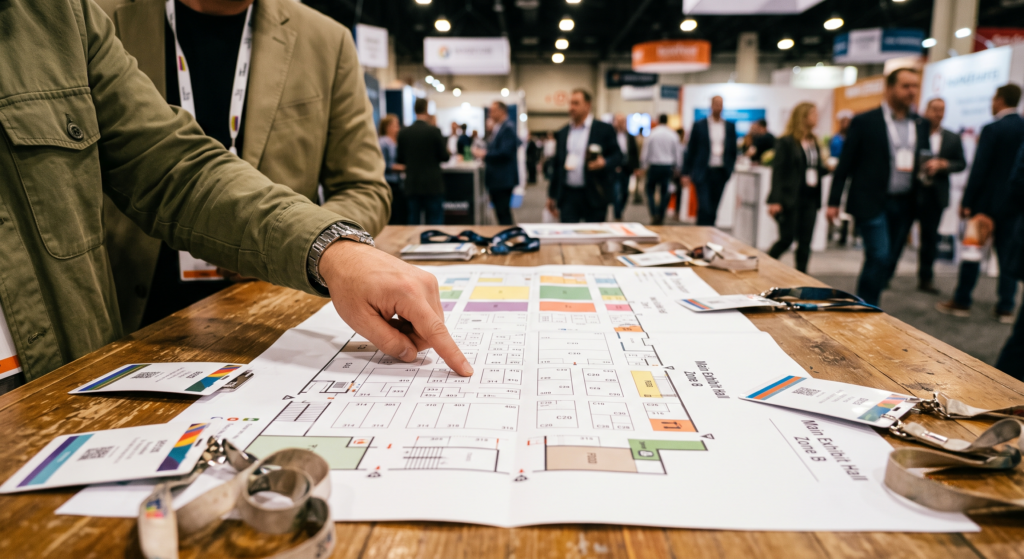
Research Where Your Customers Are
Start by identifying where your target audience spends their time.
Ask existing customers:
- Which trade shows do you attend?
- Which industry events provide the most value?
- What conferences influence purchasing decisions?
This research helps prioritize events with the highest potential.
Analyze Your Competitors
Competitor research can provide valuable insight when deciding which trade shows to attend. Review competitor websites, social media pages, and exhibitor directories to see which events they consistently participate in, how they position their brand, and whether they’re investing in larger or more prominent exhibits. If several competitors prioritize the same trade show year after year, it’s a strong indicator that the event offers valuable opportunities to connect with your target audience.
Consider National, Regional, and Niche Events
Not every company needs to exhibit at the industry’s largest event. Trade shows generally fall into three categories: national and international events like IMTS, PACK EXPO, FABTECH, and MODEX, which offer maximum exposure but come with higher costs; regional trade shows, which are more affordable and attract localized audiences; and niche industry events, which typically have smaller attendance but often generate more qualified conversations because they focus on a specific market. The right choice depends on your goals, budget, and where your ideal customers are most likely to be.
Set Goals Before the Event
Every trade show should begin with clearly defined objectives.
- Generate qualified sales leads
- Increase brand awareness
- Launch a new product
- Meet existing customers
- Recruit employees
- Strengthen industry presence
Having measurable goals makes evaluating success much easier after the event.
Audit Your Existing Trade Show Performance
If your company already exhibits regularly, it’s important to evaluate which shows deserve future investment.
Many manufacturers continue attending events simply because “we’ve always gone.”
Instead, use data.
Track Every Lead
Every booth visitor should be entered into your CRM with key information such as the trade show source, contact details, lead quality, opportunity status, and any resulting closed revenue. Consistently tracking this data allows you to measure performance, attribute sales to specific events, and accurately calculate your trade show ROI. Without a reliable tracking system, it’s nearly impossible to determine which trade shows are delivering real business value.
Measure Revenue—Not Just Leads
Booth traffic doesn’t pay the bills.
Instead of celebrating badge scans, evaluate:
- Qualified leads generated
- Opportunities created
- Deals won
- Revenue closed
- Total ROI
Many companies discover that only a small percentage of conversations become customers. Those conversions (not total visitors) should drive future exhibit decisions.
Focus on High-Performing Shows
Many industrial companies eventually reduce their trade show schedule from ten or more annual events to only four or five.
Instead of spreading budgets across numerous average-performing shows, they invest more heavily in the events producing measurable business results.
Often, less becomes more.
Budgeting for Tradeshow Success
One of the most overlooked parts of tradeshow planning is understanding the true cost of exhibiting.
Booth space is only one piece of the equation.

Booth
Space
Most trade shows price exhibits by square footage.
Costs vary based on:
- Booth size
- Event location
- Corner booths
- Island exhibits
- Premium traffic areas
Larger booths often receive discounted square-foot pricing but require significantly larger overall investments.
Lead Capture Technology
Every exhibitor needs an efficient process for collecting lead information.
Options include:
- Badge scanners
- Mobile lead capture apps
- AI-powered badge readers
- CRM integrations
The faster your team captures information, the more qualified conversations they can have.
Utilities and Show Services
Don’t forget to budget for:
- Electricity
- Internet
- Furniture rentals
- Cleaning
- Additional power
- Equipment hookups
These costs frequently surprise first-time exhibitors.
Shipping and Installation
Moving exhibit materials involves:
- Freight
- Material handling
- Union labor
- Installation
- Dismantling
- Storage
Custom exhibits often require additional logistics that substantially increase costs.
Booth
Displays
Display investments range from simple pop-up banners to fully custom exhibit environments.
Your display should reflect your brand while supporting your sales process, not simply filling space.
Travel and Staffing
Personnel often become one of the largest expenses.
Budget for:
- Flights
- Hotels
- Meals
- Ground transportation
- Employee time away from regular responsibilities
Choosing the right staff is just as important as choosing the right booth.
Don't Forget Tradeshow Giveaways
While tradeshow giveaways shouldn’t be your primary lead generation strategy, they can help attract more visitors to your booth and leave a lasting impression on potential customers.
The most effective giveaways are practical, useful after the event, relevant to your audience, and memorable without feeling gimmicky. Instead of handing out inexpensive promotional items that are likely to be discarded, invest in branded products your prospects will continue to use, keeping your company top of mind long after the trade show ends.
Booth Location Can Make or Break Your Results
Booth placement has a significant impact on visibility and traffic.
Whenever possible, choose locations near:
- Main entrances
- Food courts
- Rest areas
- High-traffic intersections
- Major exhibitors
If premium locations aren’t available, it may be worth waiting until the following year instead of settling for a poor location.
When evaluating a new trade show, consider attending as a visitor first to study traffic patterns before investing in exhibit space.
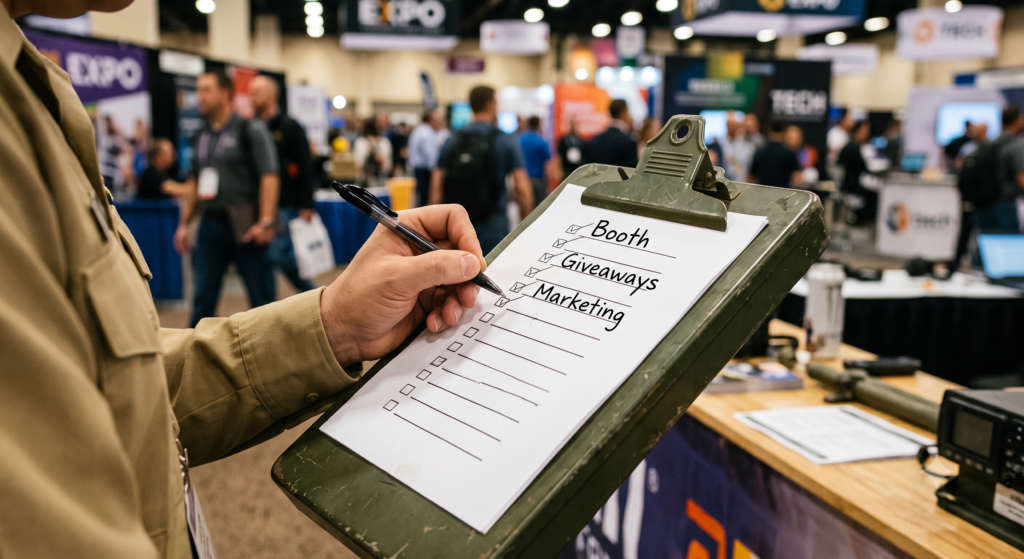
Your Tradeshow Checklist
Before your next event, make sure you’ve completed the following:
- Define your tradeshow strategy and objectives.
- Research competitors and customer attendance.
- Select the right trade show.
- Build a realistic budget.
- Reserve your booth location.
- Order utilities and show services.
- Select a lead capture system.
- Design or refresh your exhibit.
- Purchase marketing materials and tradeshow giveaways.
- Train booth staff.
- Launch pre-show marketing campaigns.
- Create a post-show follow-up process.
Completing this tradeshow checklist ensures your team is prepared before arriving on the show floor.
Final Thoughts
Successful tradeshow planning isn’t about attending the most events, it’s about attending the right events with a clear strategy.
By selecting the best trade shows, tracking meaningful performance metrics, budgeting realistically, investing in thoughtful tradeshow giveaways, and following a repeatable tradeshow checklist, industrial manufacturers can consistently improve ROI while strengthening their presence within the industries they serve.
The companies that treat trade shows as strategic business investments (not annual traditions) are the ones that continue generating qualified opportunities long after the exhibit hall closes.
FAQs
How do I start tradeshow planning?
Start by identifying where your customers and competitors exhibit, defining measurable goals, building a realistic budget, and creating a detailed pre-show plan.
What makes a successful tradeshow strategy?
A successful tradeshow strategy focuses on attending the right events, setting clear objectives, tracking leads in a CRM, and measuring ROI based on closed business, not booth traffic.
What should be included in a tradeshow checklist?
A tradeshow checklist should include event selection, budgeting, booth design, staffing, lead capture, marketing materials, tradeshow giveaways, logistics, and post-show follow-up.
Are tradeshow giveaways worth the investment?
Yes. Well-designed tradeshow giveaways can attract visitors, improve brand recall, and create additional opportunities for meaningful conversations when paired with a strong booth experience.