

Qualified inbound leads stall at industrial distributors because follow-up is slow, manual, or both. A buyer requests a quote on Tuesday morning, the form lands in a shared inbox, and nobody replies until Thursday. Marketing automation for industrial distributors closes that gap by capturing every inquiry, sending it to the right rep, and starting the conversation within minutes.
At Milan Media, we build these systems for manufacturers and distributors, so this guide sticks to what works on real sales floors. Below, we cover where leads stall, what automation changes, and how to start without a giant software project.
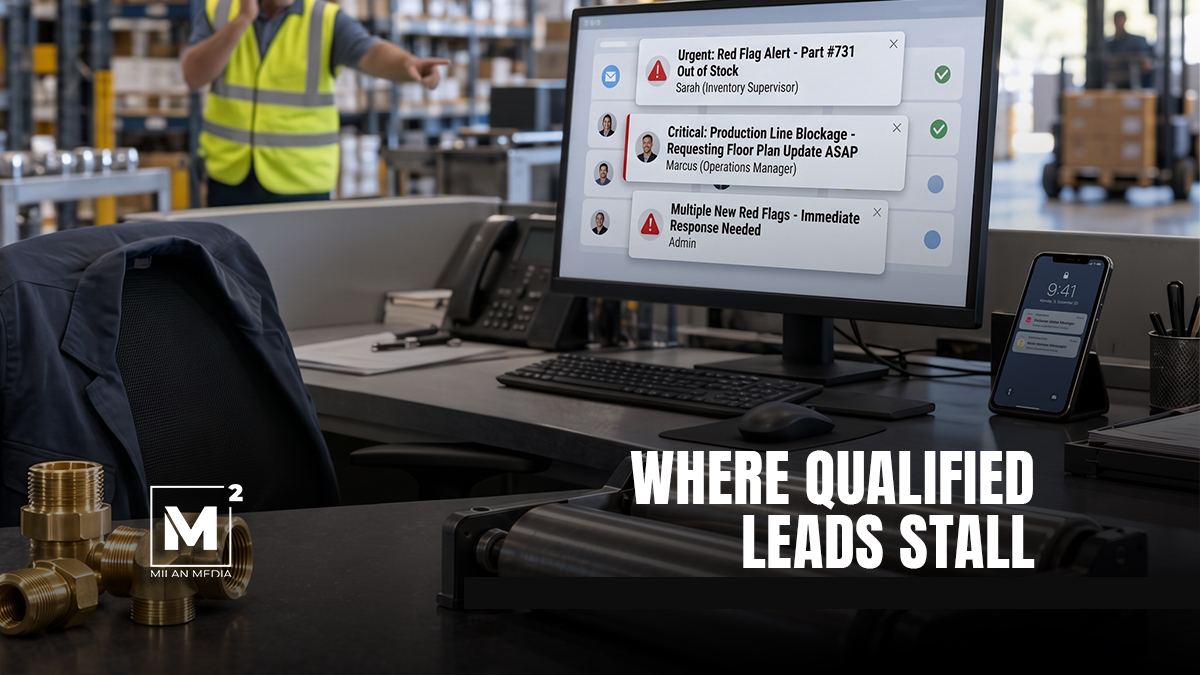
Why leads stall at industrial distributors
The causes are rarely mysterious. They show up in the same three places at almost every distributor we meet.
Manual handoffs come first. A web form emails a general sales address. Someone forwards it to a rep, the rep copies details into the CRM later, and the buyer waits the whole time. Every handoff adds delay, and every delay gives a competitor time to answer first.
Missing lead routing comes second. Without rules, a request for a hydraulic fitting quote sits beside a request for a large blanket order, and nobody knows who owns which. Lead routing for manufacturers/distributors should match each inquiry to a rep by product line, region, account size, or customer status. When that logic lives in one person’s head, leads wait for that person to check email.
Reps buried in quotes are the third cause. Inside sales teams at distributors quote all day, and a fresh web inquiry feels less urgent than the RFQ already open on the screen.
Buyers notice. Industrial buyers often send the same request to three or four suppliers, and the one that replies first with a clear answer usually earns the next conversation. A slow reply can remove you from the shortlist before price or inventory even come up.
Ready to stop losing buyers to slower replies? See how Milan Media can build a follow-up system for your sales team.
What marketing automation actually does here
Strip away the jargon and the system does three jobs: capture, route, and follow up. Capture means every form fill, quote request, catalog download, and chat message lands in one place, usually the CRM, with the page, product, and traffic source attached. As a HubSpot solutions partner, we set this up so sales sees the full context instead of a bare email address.
Route means rules assign each lead to a rep and create a task. Territory, product category, and deal size can all pick the owner. If the rep does not act inside a set window, the lead moves to a teammate or a manager.
Follow-up means the system sends a confirmation right away, then a short note from the assigned rep with next steps. If the buyer opens a spec sheet or revisits a product page, the rep gets a prompt. That is qualified lead follow-up that runs on rules instead of memory.
Marketing automation for industrial distributors does not replace the rep. It removes the waiting between a buyer’s request and a human reply. Our CRM implementation and email marketing services build this layer. The same tracking also shows how industrial distributors get more qualified leads online, because you can see which pages, ads, and search terms bring buyers worth quoting.
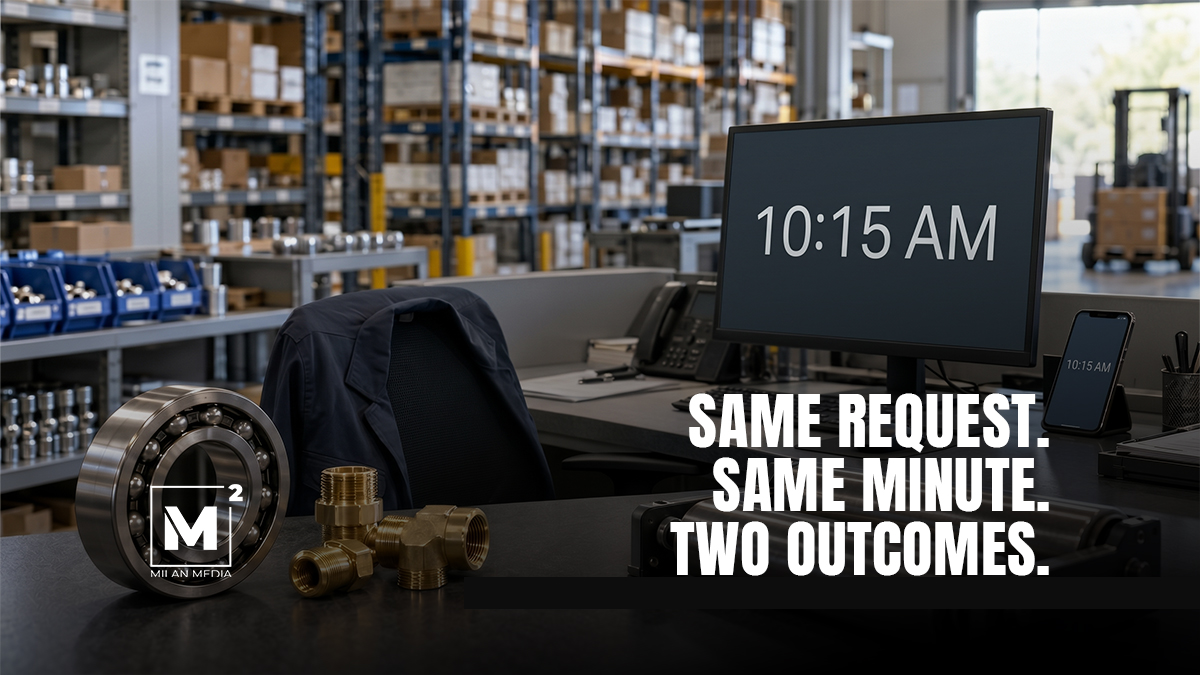
What faster lead follow-up looks like in practice
A simple before and after shows the difference.
Before: A buyer at a packaging plant submits a quote request for conveyor components at 9:40 a.m. The form goes to a shared inbox. A rep sees it after lunch, looks up the company, adds it to the CRM by hand, and sends an email at 3:15 p.m. The buyer has already spoken with two other suppliers.
After: Same request, same time. Within a minute, the buyer gets a confirmation that states the expected response time. The CRM logs the lead with the product page and source. Routing assigns it to the rep who covers conveyors in that region, and the rep gets a task on a phone. The rep sends a personal reply by 10:15 a.m. If the rep does not act within two hours, the lead moves to the next person in the queue. If the buyer stays quiet, a short sequence sends a spec sheet on day two and a check-in on day five.
Nothing here is exotic. The gain comes from removing waiting, not from adding lead volume.
Have a complex product line or a tangled CRM?
Milan Media is up to the challenge.
How to get started
You do not need to rebuild everything at once. Marketing automation for industrial distributors pays off fastest when the first project is small and tied to one product line.
First, map what happens today. Trace one lead from form fill to first reply and write down every handoff and every hour of waiting.
Second, clean up the CRM. Automation is only as good as the data behind it. Standard fields for product line, region, and lead source make routing rules possible. If your current tool no longer fits, our CRM migration work can move you without losing history.
Third, write three to five routing rules and one follow-up sequence. Start with your highest-volume product line. Keep the sequence to two or three emails, written in plain language by someone who knows the product.
Fourth, track response time and the share of quote requests that turn into conversations, then adjust after 60 days. Automation will not fix weak pricing or thin inventory, and routing rules usually need a few rounds of tuning.
If you want a partner, our marketing automation for industrial distributors team can review your current workflow and build the first sequence alongside your sales staff. We also pair the workflow with SEO and LinkedIn campaigns, so new inquiries arrive in a system ready to handle them.
What could faster follow-up do for your pipeline?
Contact us today to find out more.
FAQs
What is marketing automation for industrial distributors?
Marketing automation for industrial distributors is a set of rules inside your CRM and email tools that captures every inquiry, routes it to the right rep, and starts follow-up within minutes, without manual forwarding. It handles three jobs — capture, route, and follow up — so a buyer’s quote request gets a human reply fast instead of sitting in a shared inbox.
How fast should an industrial distributor follow up with a qualified lead?
As fast as your team can staff it. A realistic target for most distributors is an automatic confirmation within one minute and a personal reply from the assigned rep within the same business morning. Speed matters because industrial buyers often send the same request to three or four suppliers, and the one that replies first with a clear answer usually earns the next conversation.
How does lead routing for manufacturers and distributors work?
Lead routing uses rules to match each inquiry to the right rep by product line, region, account size, or customer status, then creates a task so nothing is forgotten. If the assigned rep does not act within a set window, the lead automatically moves to a teammate or manager, so qualified lead follow-up never depends on one person checking their email.
Do we need a new CRM to start using marketing automation?
Not always. Many industrial distributors can begin with the CRM they already have, as long as the product line, region, and lead source fields are consistent. If the current tool no longer fits, a CRM migration can move you to a better platform without losing historical data.
How do industrial distributors get more qualified leads online?
The same automation that captures and routes inquiries also tracks which pages, ads, and search terms bring buyers worth quoting, so you can see where qualified leads come from and invest there. Pairing the workflow with SEO and LinkedIn campaigns means new inquiries arrive in a system that is already built to follow up fast.