
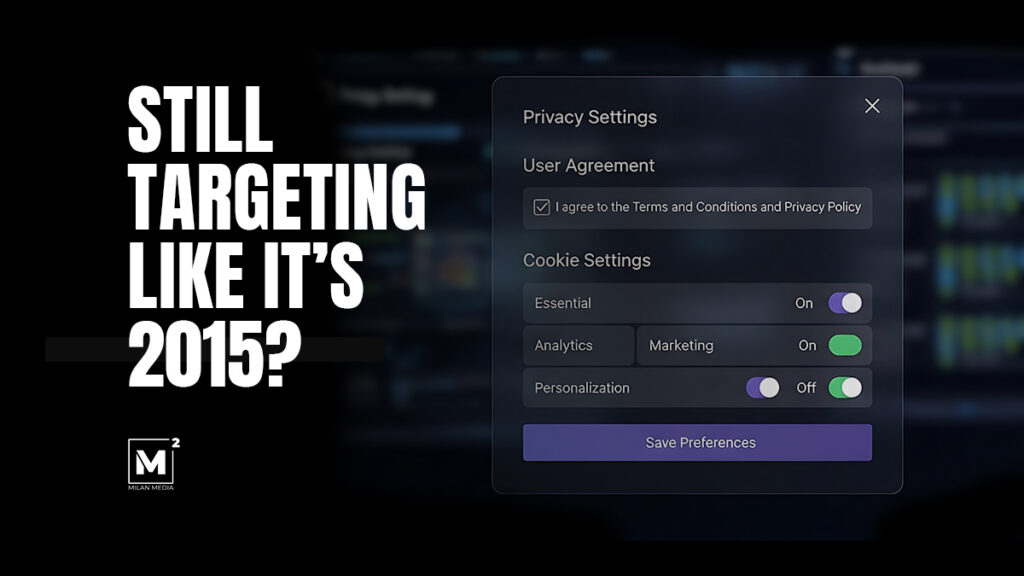
For two decades, the third-party cookie was the quiet engine behind digital marketing. It tracked shoppers across websites, built behavioral profiles, and let brands retarget the same person a dozen times before they ever hit “buy.” That era is closing fast. Browsers are phasing cookies out, regulators are tightening the rules, and consumers are demanding more control over their own data. The result is a full-scale shift toward cookieless marketing, and businesses that haven’t adapted are already falling behind.
This isn’t a minor technical adjustment. It’s a fundamental rethinking of how brands find, understand, and reach their audiences.
Why the Cookie Is Crumbling
Apple’s Intelligent Tracking Prevention, Firefox’s Enhanced Tracking Protection, and Google’s long-promised phaseout of third-party cookies in Chrome have collectively removed the foundation most digital advertising was built on. Layer on top of that a wave of privacy legislation, including the GDPR in Europe, the CCPA and CPRA in California, and a growing patchwork of U.S. state laws, and the message is unmistakable: unchecked data collection is no longer acceptable to lawmakers or the public.
Consumers have taken notice too. Surveys consistently show that people want transparency about how their data is used, and many will abandon a brand that mishandles it. Privacy-first marketing isn’t just a compliance requirement anymore; it’s become a genuine trust signal that shapes buying decisions.
What Cookieless Marketing Actually Means
Cookieless marketing doesn’t mean marketing in the dark. It means building strategies around data that customers willingly share, rather than data quietly harvested behind the scenes. That shift centers on three pillars: first-party data, contextual relevance, and consent-based communication.
A strong first-party data strategy is now the backbone of any resilient marketing program. Instead of renting audience insight from ad networks, brands are collecting information directly through owned channels: website forms, loyalty programs, email sign-ups, and gated content. This data is more accurate, more legally defensible, and far more valuable because the customer chose to hand it over.
We help clients build exactly this kind of foundation. Our marketing automation services connect a client’s website, CRM, and email platform into a single system that captures first-party signals the moment a visitor engages, whether that’s downloading a spec sheet, requesting a quote, or subscribing to a newsletter. Rather than chasing shoppers across the open web, brands can nurture the people who’ve already raised their hand.
Ready to build a marketing strategy that doesn’t depend
on borrowed data? Find out what we can do for your next campaign.
Contextual Advertising Makes a Comeback
As behavioral tracking fades, contextual advertising is reclaiming its place as a smart, privacy-friendly alternative. Instead of targeting a person based on months of browsing history, contextual placement matches an ad to the content surrounding it, a plumbing supply company advertising alongside a home-repair article, or an industrial parts distributor appearing next to a manufacturing trade publication.
Modern contextual targeting has grown far more sophisticated than the keyword-matching of the early 2000s. Natural language processing now reads page sentiment, topic depth, and audience intent in real time, allowing brands to reach the right mindset without ever touching personal data. For B2B and industrial clients especially, this approach can outperform behavioral retargeting, because the buyer’s intent is already baked into the page they’re reading.
Email: The Original First-Party Channel
If there’s one channel that was built for a cookieless world from the start, it’s email. A subscriber list is data a company owns outright, with no browser update or regulatory shift able to take it away. That’s why our email marketing services remain such a critical part of a privacy-first playbook. Segmented, permission-based campaigns let brands speak directly to people who’ve already opted in, using real engagement data like opens, clicks, and purchase history to personalize the message.
The businesses seeing the strongest returns right now are treating email not as a leftover tactic, but as the anchor of their entire retention strategy, feeding first-party insight back into every other channel.

Social Media Steps Into the Gap
Social platforms have always operated largely on first-party and platform-level data, which makes them a natural landing spot for brands displaced by cookie deprecation. But broad, national campaigns aren’t always the answer. Our hyperlocal social media marketing approach helps regional and trade-focused clients speak directly to the communities and industries that matter most, using geo-targeted content, local partnerships, and platform-native engagement instead of blanket audience buys.
This kind of tightly targeted, community-driven presence tends to build the same loyalty and trust that first-party data collection depends on, because the audience feels spoken to rather than simply tracked.
Have a niche audience or a hard-to-reach market? We’re up to the challenge.
Trade Shows and Real-World Touchpoints
Ironically, one of the best sources of first-party data has always existed offline. Events like IMTS 2026 and FABTECH Las Vegas 2026 generate direct, consent-based contact information from attendees genuinely interested in a company’s products. We work with clients to turn trade show engagement into structured campaigns, capturing leads on-site and folding them into automated nurture sequences that carry the conversation forward long after the show floor lights go down.
Measuring Success Without the Old Toolkit
One of the biggest adjustments in a cookieless marketing environment is how success gets measured. Marketers who grew up on last-click attribution and third-party pixel tracking now have to lean on different signals: server-side tracking, first-party analytics tied directly to a company’s own website and CRM, and modeled attribution that estimates impact without following an individual across the internet.
This isn’t a downgrade, it’s often a clearer picture. First-party analytics tend to be more accurate because they’re built on data the business actually owns, rather than a patchwork of third-party estimates that were never fully reliable to begin with. We build reporting frameworks around these owned data sources, so clients can see which channels, campaigns, and content are genuinely driving inquiries and revenue, not just clicks.
Building a Strategy That Lasts
None of these tactics work in isolation. A modern, privacy-first marketing program blends owned data collection, contextual placement, permission-based email, and community-level social presence into a single, coordinated system. The brands that get ahead of this shift won’t just stay compliant, they’ll build deeper, more trustworthy relationships with their audiences than the old cookie-based model ever allowed.
For manufacturing, industrial, and B2B companies especially, the move toward cookieless marketing is less a loss than a correction. These industries were never well served by broad behavioral targeting to begin with; their buyers are specific, their sales cycles are long, and their decisions hinge on trust built over time. A cookieless marketing approach, grounded in owned data and genuine engagement, actually fits that reality far better than the old model ever did.

The cookie isn’t just crumbling. It’s being replaced by something better: marketing built on real relationships instead of borrowed data. Milan Media helps clients across every one of these channels navigate the shift with a coordinated, privacy-first marketing strategy built for where digital advertising is headed next.
What can a privacy-first marketing plan do for your business? Contact us today to find out more.
FAQs
What is cookieless marketing?
Cookieless marketing is a digital marketing approach that uses first-party data, contextual advertising and consent-based communication instead of third-party cookies that track users across websites.
How can businesses collect first-party data?
Businesses can collect first-party data through website forms, email subscriptions, loyalty programs, gated content, quote requests and trade show interactions. This information can then be organized through a CRM or marketing automation platform.
How does contextual advertising work without cookies?
Contextual advertising places ads based on the subject, meaning and intent of the content a user is currently viewing. It reaches relevant audiences without using personal information or past browsing activity.
How can marketers measure results without third-party cookies?
Marketers can measure performance using first-party website analytics, CRM data, server-side tracking and modeled attribution to determine which campaigns generate engagement, inquiries and revenue.