

The SaaS landscape continues to become more competitive. Paid acquisition costs are increasing, buyers conduct more independent research, and software categories are increasingly crowded.
As a result, SEO for SaaS has become one of the most valuable growth channels available. Unlike paid advertising, organic search can generate qualified traffic and pipeline consistently without requiring continuous increases in budget.
However, SaaS SEO requires a different approach than traditional B2B or ecommerce SEO. Long buying cycles, multiple decision-makers, and research-heavy customer journeys demand a strategy built around the entire funnel.
Why SEO for SaaS Requires a Different Strategy
SaaS buyers rarely convert after a single search. A typical journey includes identifying a problem, researching solutions, comparing vendors, reviewing alternatives, and evaluating pricing before engaging with sales.
Each stage creates opportunities to capture search demand.
For example, a prospect searching “marketing automation software” has a different intent than someone searching “HubSpot alternatives” or “best CRM for manufacturing companies.”

Successful SaaS companies build content and landing pages that align with each phase of the buyer journey rather than focusing exclusively on awareness traffic.
Build Topic Authority Instead of Isolated Content
Search engines increasingly reward websites that demonstrate expertise across an entire subject area. Rather than publishing disconnected blog posts, SaaS brands should create topic clusters around their core solutions and customer challenges.
For example, a project management platform may build content around:
- Workflow automation
- Resource planning
- Team collaboration
- Capacity management
- Agile project delivery

This approach helps search engines understand topical relevance while creating multiple entry points for potential buyers.
Many organizations working with a specialized SaaS SEO consultant prioritize topic authority because it supports sustainable organic growth over time.
Focus on Bottom-Funnel Keywords
Traffic alone does not drive revenue. The most effective SEO programs prioritize keywords with strong commercial intent.
These often include:
Comparison Pages
Comparison content targets prospects actively evaluating solutions. Examples include:
- Salesforce vs HubSpot
- Monday.com vs Asana
- Best CRM software for healthcare
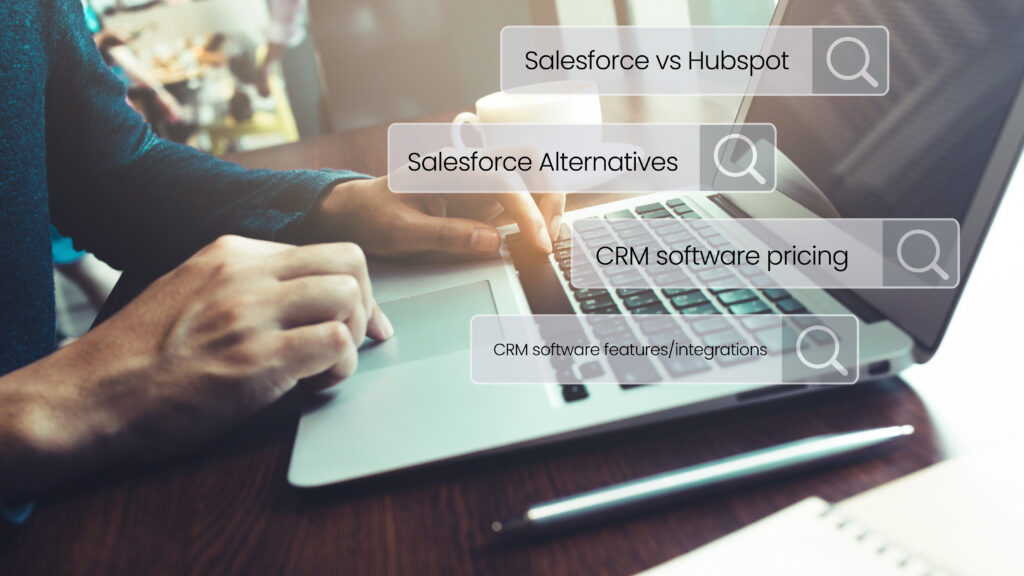
These searches often indicate buyers are nearing a decision.
Alternative Pages
Alternative pages continue to be among the highest-converting assets for SaaS companies. Examples include:
- Mailchimp alternatives
- Asana alternatives
- Salesforce alternatives
These pages allow SaaS brands to position their platform against established competitors while addressing common evaluation criteria.
Pricing and Feature Searches
Users researching pricing, integrations, features, or implementation requirements are often much closer to conversion than visitors reading educational content.
Creating dedicated pages around these topics can significantly improve lead quality.
Develop Industry-Specific Content
Generic messaging rarely performs well in competitive SaaS markets. One of the strongest opportunities in 2026 is creating content and landing pages tailored to specific industries.
Examples include:
- CRM software for manufacturers
- Marketing automation for healthcare organizations
- ERP software for construction companies

Industry-focused content addresses unique challenges, terminology, and workflows that generic pages often overlook. This strategy frequently improves both rankings and conversion rates.
Companies looking to scale industry-focused visibility can benefit from comprehensive SEO strategies.
Leverage Product-Led SEO
Product-led SEO continues to gain momentum because it combines user value with organic visibility. Instead of relying entirely on blog content, SaaS companies can create search-focused assets tied directly to product functionality.
Examples include:
- ROI calculators
- Templates
- Cost estimators
- Assessment tools
- Benchmark reports

These resources attract links naturally while generating highly qualified traffic.
In many cases, product-led assets can outperform traditional content because they provide immediate value to users.
Connect SEO to Revenue Metrics
One of the most common mistakes SaaS companies make is measuring SEO success solely through traffic and rankings. Executive teams care about business outcomes.
SEO reporting should connect search activity directly to metrics such as:
- Demo requests
- Free trial signups
- Marketing-qualified leads
- Sales-qualified opportunities
- Pipeline contribution
- Revenue attribution

Organizations investing in professional SaaS SEO Services should expect visibility into how SEO influences business growth rather than simply reporting keyword movements.
When SEO is tied to revenue, it becomes easier to justify continued investment.
Strengthen Technical SEO Foundations
Content strategy drives visibility, but technical SEO creates the foundation that supports growth. Key priorities for SaaS websites include:
Site Speed
Fast-loading websites create better user experiences and support stronger rankings.
Crawlability
Search engines need clear access to important pages and content assets.

Internal Linking
Strategic internal links help distribute authority throughout a website while improving discoverability. Companies investing in modern website experiences often combine SEO and development initiatives.
Structured Data
Schema markup helps search engines better understand content and can improve search result visibility.
Content Audits
As SaaS websites grow, outdated content often accumulates. Regular audits help identify opportunities to refresh, consolidate, or remove underperforming pages.
Publish Original Research and Insights
AI-generated content has increased dramatically, making original expertise more valuable than ever. SaaS companies possess unique data and insights that competitors cannot easily replicate.
Examples include:
- Customer benchmarks
- Product usage trends
- Industry surveys
- Proprietary research
- Market reports

Publishing original findings strengthens authority, attracts backlinks, and creates opportunities for earned media coverage.
When combined with broader content initiatives, these assets can contribute significantly to both demand generation and organic visibility.
Choosing the Right SaaS SEO Partner
Not every agency understands the challenges associated with recurring revenue businesses. When evaluating a B2B SaaS SEO Agency, companies should look for:
- SaaS-specific experience
- Technical SEO expertise
- Revenue-focused reporting
- Content strategy capabilities
- Conversion-focused thinking
The strongest partners focus on business growth rather than vanity metrics.

The Future of SEO for SaaS
The SaaS companies that succeed in 2026 will treat SEO as a long-term revenue engine rather than a publishing activity.
Winning strategies combine technical excellence, topic authority, industry-focused content, product-led experiences, and revenue alignment.
As acquisition costs continue to rise across paid channels, organic search remains one of the most scalable ways to generate qualified pipeline and sustainable growth.

FAQs
How long does SEO for SaaS take to show results?
Most SaaS companies begin seeing measurable gains within three to six months, although highly competitive industries may require longer timelines.
Why is SEO important for SaaS companies?
SEO helps SaaS brands attract qualified buyers throughout the research and evaluation process while reducing dependence on paid acquisition channels.
What does a SaaS SEO consultant do?
A SaaS SEO consultant develops strategies focused on technical SEO, content planning, keyword targeting, and revenue-focused growth initiatives.
What should I look for in a B2B SaaS SEO Agency?
Look for SaaS experience, technical expertise, strong content capabilities, and a proven track record of driving pipeline and revenue growth.