
With LinkedIn being one of today’s top-cited sources for AI search results (reported as #2 in an analysis by Semrush and #1 “for professional queries” by Profound), the case for posting has never been stronger—but most people still won’t even consider it as part of their marketing strategy. There’s a general perception that posting on LinkedIn doesn’t work, even though the data suggests otherwise. Why is that?
That’s because most people and businesses get LinkedIn wrong. It sounds insane to expect explosive growth after sporadically publishing a handful of posts with no rhyme or reason, right? Yet, that’s exactly the type of mindset that keeps many away from discovering the platform’s full potential.
This volatile activity can go especially poorly for brand pages. Worse, you could be doing everything right for your brand page and still not get the right audience activity—or any activity at all.
Today’s B2B brands need to take a different approach: one that’s more time consuming. One that’s “harder”. One that they’re probably not going to like at first, if they don’t just reject it outright. But the results are hard to argue with. It’s what worked for us, after all.
So, let’s get into why LinkedIn truly does not care about your brand, and how Milan Media managed to successfully grow an audience full of qualified leads in spite of that.
The Psychology
We Crave Connection With People, Not Promotions
Let’s rip the bandaid. Most of the people who come across content from your brand’s LinkedIn page just won’t care.
And that’s not anybody’s fault. It’s just how we’re wired to work. Think about it yourself.
What’s more likely to capture your attention: a post from a company you know, or a post from a friend or colleague?
The latter always wins out, and there are a few reasons for that.
You could have an airtight value proposition with pristine messaging, but neither of those will change that people can pretty quickly figure out when and how they’re being sold to.
Of course your B2B brand wants to win out against the competition. That’s the whole point of marketing. But to your company’s audience, knowing that all paths are designed to lead to an outcome that works in your favor can spark skepticism and apathy before a single conversation takes place.
Now, consider the flip side.
If a friend of yours shares a post about their unique experience with a certain process, service, or tool, isn’t that immediately more intriguing? Where brands are held to certain guidelines and standards to preserve their image, your network is beholden to no such vows. Through the lenses of colleagues you know and trust, you can get your first real glimpse at an experience that feels genuine, not calculated.
So, the spotlight has to shift away from your brand and onto the people who make the brand what it is. Often this starts with the founder, though it doesn’t necessarily have to. As long as the voices you amplify come from people with boots on the ground, you should have a solid foundation to begin with.
Want to get started with a leading LinkedIn marketing agency?
Tell us you’re in.
The Strategy
There are a few ways to center your social marketing strategy around your people. Here, we’re going over them from most to least effective.
Share Posts Directly From Your People
Zuckerberg. Musk. Mosseri. These are just a few names associated with some of the largest tech and social media companies in the world.
What these leaders understand is that people don’t just connect with brands—they connect with other people. They show up, speak proudly, and engage with their respective audiences to the point that now, their identities are intrinsically tied to the companies they represent.
Now, we’re not promising that a people-first strategy is going to launch your brand recognition into the stratosphere. But what we are saying is that you can look to these leaders as examples on how to get your audience to care about your brand and engage with it through the lens of personal connection.
Our own brand, Milan Media, is actually a great example of this. Take a look at how our own social channels compare to those of our Founder & CEO, Kyle Milan.
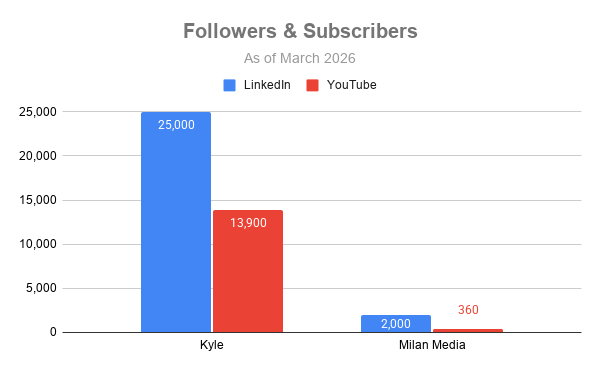
Stark difference, huh? And the impact of this dynamic goes far deeper than vanity metrics.
After digging through our CRM to find the data, it turns out that 24% of all closed deals to date can be tied back to 4 sources: LinkedIn, YouTube, Trade Shows, and Events. Those customers didn’t discover our brand, per se. They discovered the people behind it, and that’s what made all the difference. That’s what makes it so important to amplify your team members’ voices when you can.
By pure coincidence, an employee of one of our customers actually discovered Kyle’s content long before his company partnered with us. During an interview at FABTECH 2025, he recounted his experience recognizing Kyle on a call:
Although Mitchell wasn’t the final decision maker in this exact scenario, the trust that came with recognizing Kyle from his online presence instantly dissolved any feelings of doubt or unease on his side. Breaking those barriers early is incredibly crucial for a marketing agency like us to quickly deliver execution that gets results across different channels like LinkedIn, email, and so forth.
Create Posts That Feature Your People
If you don’t have posts to share directly from your founder and employees for whatever reason, the next best thing you can do is create posts that feature your people front and center. Here at Milan Media, our top 5 performing posts of 2026 to date all feature our employees and CEO.
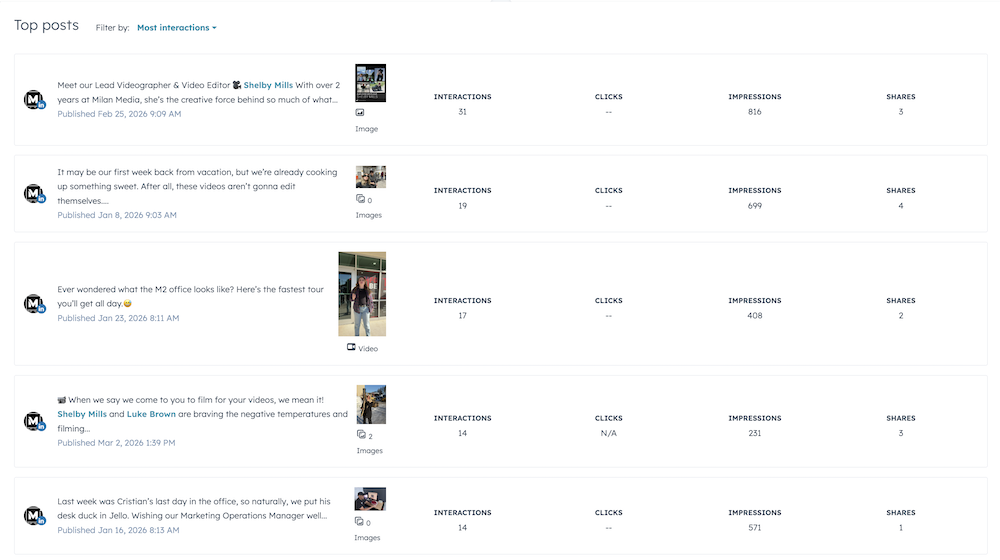
Some of these posts don’t even have anything to do with the services we offer. Like, a post about a duck in jell-o made our top 5? Really?
But that just goes to show that audiences like to see what the people at a company do, not just what the company itself does.
Interact With Others On LinkedIn
If social media is all about connecting with others, how come your company page hasn’t ever left a comment on a post?
It seems so simple, but interacting with other posts on the platform is a hugely underutilized way to get your brand in front of fresh eyes. This applies not just to the B2B brand page, but to individual users too.
In some cases, the brand page can even serve as a central hub for interaction. We take advantage of this through Live streams.
Kyle posts about upcoming streams to raise awareness to his network, then directs that audience to the Milan Media page where the streams actually happen. The streams themselves tend to attract new viewers too, especially when we go live on LinkedIn and YouTube at the same time. This method gives our team and our audience the opportunity to interact in real time, further cementing our brand and the people behind it as knowledgeable, trustworthy, and professional.
See for yourself what all the buzz is about. Follow us on LinkedIn to get notified for our next livestream.
Where Brands Still Lose The Plot
You can follow all the guidance above, and still not see results—but how? We’re going to rapid fire through some of the most common mistakes that you need to avoid if you really want to build a brand worth remembering.
Posting Inconsistently
During this process many people fall victim to the Dunnig-Kruger Effect, illustrated below.
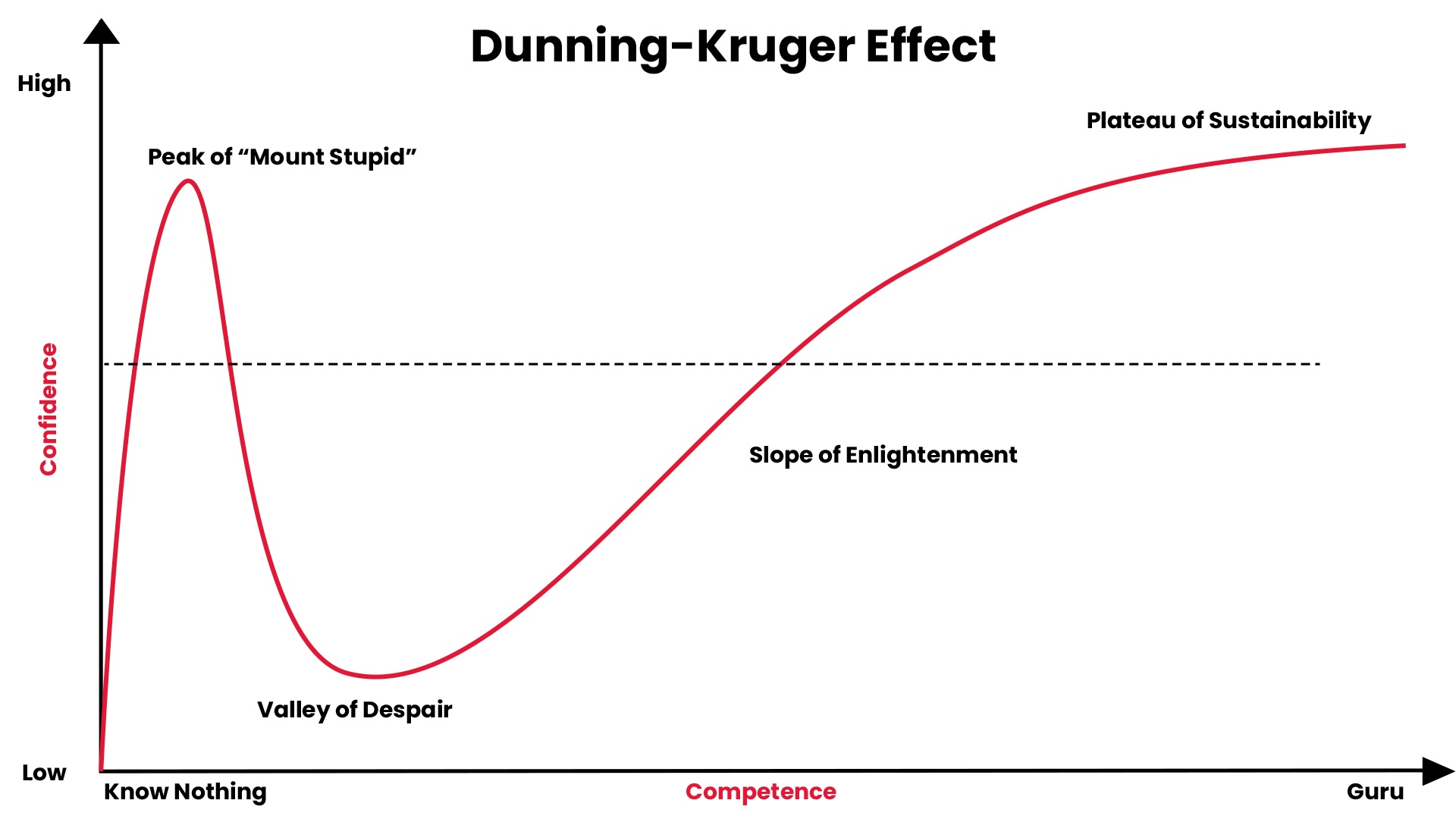
The idea is that when you start doing something as a newbie, you quickly see massive improvements as you continue to practice—but as you keep doing it, that progress stagnates and you get discouraged.
Do NOT get discouraged.
Or, if you do get discouraged, don’t let it stop you. You’re inevitably going to get to a point where you feel like you’re trudging along or that you’ve hit a wall or however you want to phrase it. At that point, just keep going.
Pushing through that period of uncertainty is what separates the winners from the losers.
Cutting Corners
There are a lot of ways you can theoretically cut corners when trying to build an online brand. None of them will work. A few of the most common mistakes we see are these:
- Bringing operations from a marketing agency in-house
- Using AI to write posts, then posting said content as-is
- Posting lukewarm takes that nobody could argue against
There are right and wrong ways to do these things, but majority of brands get it wrong. These shortcuts can all cause your messaging to get watered down to the point that it might as well be company content fodder. You come full circle to the point where nobody cares what you post, because there’s no longer substance or personality there to care about.
Those shortcuts can all boil down to becoming careless. So, the best way to avoid them is to treat your strategy and its execution with care. Sticking to the plan is often less about how you feel in the moment and more about discipline, like building any other positive habit.
Forcing It
The last mistake is trying to force the process onto people who just don’t want to do it.
If your CEO insists that they don’t have time for social media, there’s no shot that they’ll ever manage to build a following. Or if they tell you that LinkedIn marketing doesn’t work, they will demonstrate to you just how easily it can become a self-fulfilling prophecy. Having the right mindset is half the battle, if not more.
The best quality content is going to come from the people who understand the importance of LinkedIn marketing, the people who have a message they want to share with their audience, and people who want to have a true desire to connect with others. Choose your designated posters wisely—or better yet, ask for volunteers. It’s dedication that makes the difference.
Ready to unlock LinkedIn’s full potential?
Find out what’s possible from the agency that made it happen.
FAQs
Why doesn’t LinkedIn marketing work for most brands?
How can B2B companies generate leads on LinkedIn?
B2B companies generate leads on LinkedIn by sharing content through their team members, especially leadership, and consistently engaging with their network. Combining personal branding, valuable insights, and active interaction helps build trust and attract qualified leads over time.
Should I post from my company page or personal LinkedIn profile?
Posting from personal profiles is typically more effective than posting from company pages. Individual profiles tend to receive higher engagement because audiences connect with people, not brands, making them a stronger driver of visibility and lead generation.
What are the biggest LinkedIn marketing mistakes to avoid?
The most common LinkedIn marketing mistakes include posting inconsistently, relying too heavily on generic or AI-generated content, and failing to showcase real people behind the brand. These approaches reduce authenticity and limit engagement and lead generation potential.