
Headless web development is no longer a niche architectural decision reserved for enterprise engineering teams. It has become a strategic lever for brands that need speed in execution, flexibility across channels, and tighter alignment between marketing and development.
Traditional CMS platforms were built for a different era. They bundle content management, presentation, and delivery into a single system. That structure creates friction when teams attempt to launch new experiences, test variations, or expand into new digital channels.
A decoupled content system changes that equation. By separating the backend content repository from the frontend presentation layer, organizations gain control over how and where content is delivered. This shift is not just technical. It directly impacts revenue velocity, campaign agility, and customer experience consistency.
For marketing leaders and executives, the question is no longer whether headless architecture is viable. It is how to implement it in a way that supports measurable business outcomes.
What Headless Web Development Actually Changes
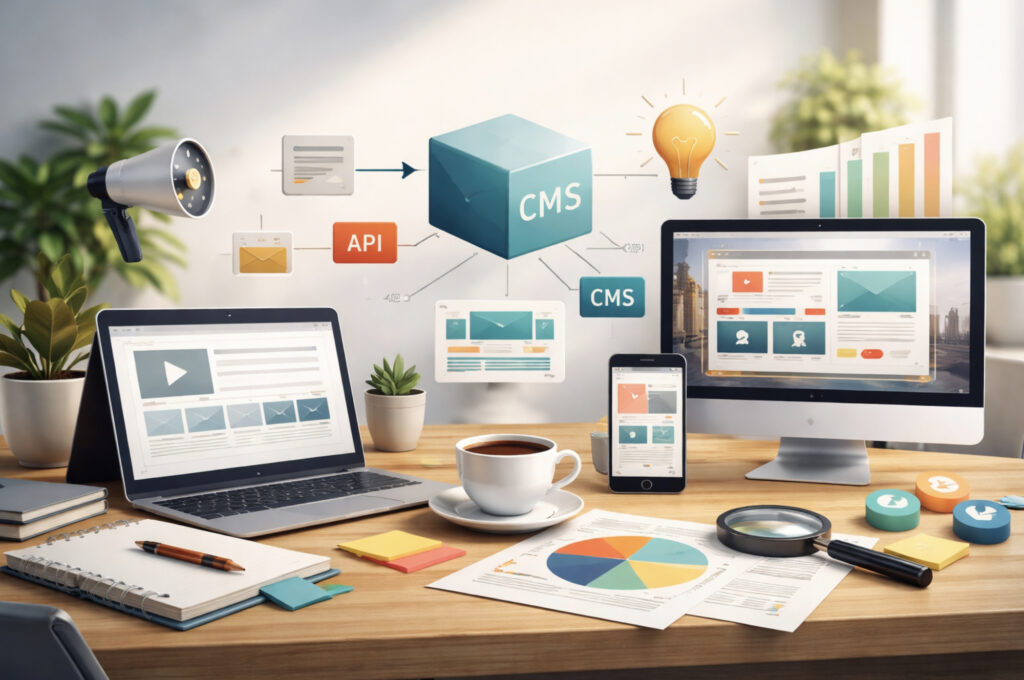
At its core, headless web development removes the dependency between content storage and content display. The CMS becomes an API-driven hub that distributes content to any interface, including websites, mobile apps, kiosks, and emerging digital touchpoints.
This separation introduces several structural advantages:
Frontend Freedom
Development teams can build interfaces using modern frameworks like React, Vue, or Next.js without being constrained by CMS templates. This enables highly customized user experiences aligned with conversion goals.
Parallel Workflows
Marketing and development teams no longer compete for the same system resources. Content can be created, edited, and deployed independently of frontend builds, accelerating campaign timelines.
Multi-Channel Distribution
A decoupled content system allows a single source of truth for content while distributing it across multiple platforms. This is critical for brands managing omnichannel journeys.
Faster Iteration Cycles
Because frontend and backend systems operate independently, updates can be deployed without risking the entire application. This reduces bottlenecks and supports continuous improvement.
For organizations focused on pipeline growth, these advantages translate into faster campaign launches, more effective personalization, and improved conversion paths.
Build a system that supports real revenue outcomes, not just technical upgrades.
Why Headless Web Design Is a Revenue Lever
Headless web design is often framed as a developer benefit. In reality, it is a revenue driver.
When design is decoupled from backend constraints, teams can build experiences that are tailored to specific audiences, devices, and stages of the funnel. This flexibility enables:
- Dynamic landing pages aligned to paid media campaigns
- Personalized content experiences based on user behavior
- Rapid A/B testing without backend limitations
- Consistent brand experiences across all touchpoints
For example, a B2B company running account-based marketing campaigns can create highly targeted landing environments for each segment without duplicating backend logic. That level of precision directly impacts conversion rates and deal velocity.
Milan Media approaches headless web design as part of a broader revenue system. It is not just about aesthetics. It is about aligning UX decisions with measurable outcomes.
Choosing the Best Headless CMS for Your Stack
Selecting the best headless CMS is one of the most critical decisions in a headless implementation. The CMS becomes the foundation for content governance, scalability, and integration.
Key considerations include:
API Flexibility
A strong headless CMS provides robust APIs that allow seamless integration with frontend frameworks, marketing tools, and analytics platforms.
Content Modeling Capabilities
Teams need the ability to structure content in a way that supports reuse across channels. Poor content modeling leads to inefficiencies and inconsistent messaging.
Editorial Experience
Even in a decoupled system, content teams require intuitive interfaces. If the CMS slows down publishing workflows, it undermines the benefits of going headless.
Integration Ecosystem
The CMS should connect easily with CRM systems, marketing automation platforms, and analytics tools to support full-funnel visibility.
Platforms like Contentful, Sanity, and Strapi are often considered among the best headless CMS options, but the right choice depends on your specific business model, technical requirements, and growth plans.
Milan Media evaluates CMS selection through the lens of revenue impact, not just technical capability. The goal is to build a system that supports scalable marketing execution.
Decoupled Content Systems and Full-Funnel Strategy
A decoupled content system becomes significantly more powerful when integrated into a full-funnel marketing strategy.
In traditional environments, content is often siloed. Blog content lives in one system, landing pages in another, and campaign assets are scattered across tools. This fragmentation limits visibility and slows execution.
With a headless architecture:
- Content is centralized but distributed dynamically
- Campaigns can be launched across multiple channels simultaneously
- Data flows more cleanly between systems
- Personalization becomes more achievable at scale
This is where Milan Media’s approach stands out. Headless web development is not treated as an isolated project. It is integrated with:
- SEO strategy to drive organic growth
- Paid media campaigns to capture demand
- Marketing automation to nurture leads
- Content marketing to build authority
Real-World Applications of Headless Architecture
The impact of headless web development is most visible in how brands execute digital experiences.
Omnichannel Commerce
Retail brands use decoupled systems to deliver consistent experiences across web, mobile, and in-store interfaces. Product data and content are managed centrally but displayed differently depending on the channel.
B2B Lead Generation
Complex B2B organizations leverage headless systems to create tailored experiences for different industries, personas, and buying stages. This supports more effective lead qualification and nurturing.
Content-Driven Platforms
Media companies and SaaS brands use headless CMS platforms to distribute content across blogs, apps, and knowledge bases without duplicating effort.
Rapid Campaign Deployment
Marketing teams can launch new landing pages or microsites without waiting for backend changes, reducing time-to-market for campaigns.
These use cases highlight a common theme: headless architecture enables execution speed and strategic flexibility.
Transform your website into a high-converting growth engine.
Common Pitfalls in Headless Web Development
Despite its advantages, headless web development is not without challenges. Organizations that approach it without a clear strategy often encounter issues.
Overengineering the Stack
Not every business needs a highly complex architecture. Overbuilding can lead to unnecessary costs and slower implementation timelines.
Lack of Alignment Between Teams
Headless systems require close collaboration between marketing, development, and leadership. Misalignment can result in fragmented execution.
Inadequate Content Strategy
A decoupled content system is only as effective as the content model behind it. Without a clear structure, teams struggle to scale content effectively.
Ignoring Data Integration
Headless systems must connect with analytics and CRM platforms to provide actionable insights. Without this integration, decision-making becomes limited.
Milan Media addresses these challenges by aligning technical architecture with business objectives from the outset.
The Future of Headless Web Development Services
Headless web development services are evolving beyond simple decoupling. The next phase focuses on composable architecture, where businesses assemble best-in-class tools into a unified ecosystem.
This includes:
- Headless CMS platforms
- Frontend frameworks
- Commerce engines
- Personalization tools
- Analytics platforms
The result is a modular system that can adapt as business needs change.
For growth-focused organizations, this flexibility is a competitive advantage. It allows teams to respond quickly to market shifts, launch new initiatives, and scale without being constrained by legacy systems.
Align your marketing and development teams around a scalable digital foundation.
FAQs
What is headless web development?
How does a decoupled content system improve marketing?
What is the best headless CMS?
The best headless CMS depends on your needs. Popular options include Contentful, Sanity, and Strapi, each offering different strengths in flexibility, scalability, and integrations.
Is headless web design worth the investment?
For organizations focused on growth, headless web design can significantly improve flexibility, speed of execution, and user experience, all of which contribute to revenue outcomes.